Old Diner Menus With Prices You Won’t Believe
Fifteen-cent hamburgers and dime coffee: a look at what American diner menus charged in the 1950s and 1960s, and why.
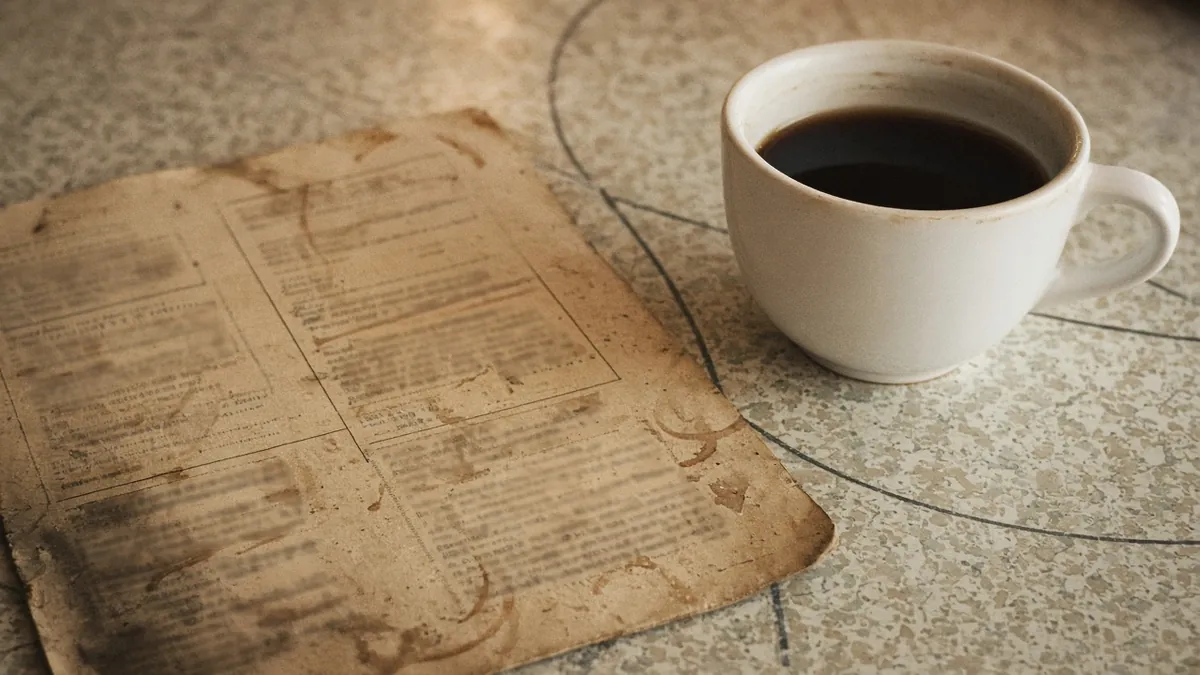
Find an old diner menu from the 1950s or 1960s and the prices look like a misprint. A hamburger for well under a quarter. Coffee for a dime. A full breakfast for less than what a single cup of coffee costs today.
Those prices were real, but so were the wages of the time. Here is a look at what diners and lunch counters commonly charged back then, and why the numbers look so different from today’s.
01The Fifteen-Cent Hamburger
When McDonald’s began expanding in the mid-1950s, its basic hamburger cost 15 cents, a price it kept for roughly a decade. Neighborhood diners charged more for a burger on a plate, often somewhere between a quarter and fifty cents, depending on the town.
02Coffee for a Dime
A cup of coffee at many lunch counters cost around a dime, and refills were often free. The bottomless cup became a diner tradition, and for many regulars the coffee was the main reason to sit at the counter.
The dime coffee came with a dime-sized paycheck to match.
03The Blue Plate Special
Diners often offered a daily special, a full meal of meat, potatoes, and vegetables served on one plate. Menus from the era commonly list these for well under a dollar, which made them popular with workers on a lunch break.
04Pie by the Slice
A slice of homemade pie, displayed under a glass dome on the counter, was often priced at a quarter or less. Adding a scoop of ice cream, a la mode, typically cost just a few cents more.
05What Wages Looked Like
Those low prices matched lower pay. The federal minimum wage was one dollar an hour in 1960 and rose to $1.25 by 1963. Thanks to inflation, a dollar from the early 1960s has roughly the buying power of ten dollars or more today, so a meal was not as cheap as it first appears.
06Why the Menus Are Collectible
Old menus were usually thrown away when prices changed, so surviving copies are relatively rare. Collectors look for menus with bold graphics, local landmarks, or famous roadside diners, and some end up framed in restaurants as a nod to the past.
Old diner menus are a fun time capsule, showing not just prices but what Americans liked to eat. The next time you pay for a latte, it is worth remembering that the dime coffee came with a dime-sized paycheck to match.